Request for callback
By


5. Check Form 26AS and AIS Regularly
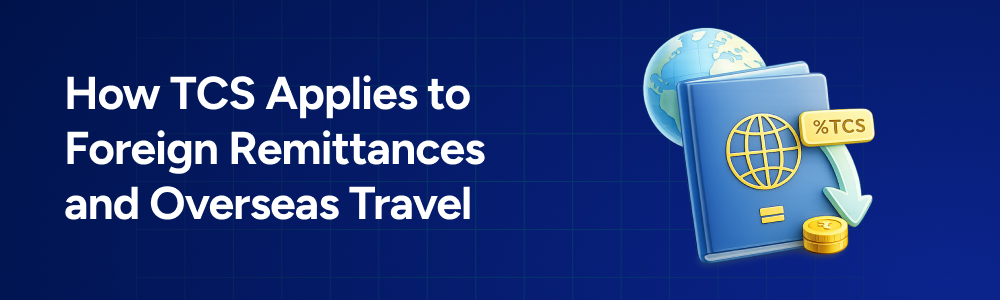
More and more Indians are spending money on international travel, overseas education, foreign investments, and sending money abroad. Because of this, the government has made tax rules stricter to keep a better track of these transactions.
One important tax rule that many people don’t know about is called TCS (Tax Collected at Source).
Many people get surprised and worried when their bank or tour operator tells them to pay an extra 5% or even 20% before sending money abroad. This creates confusion and makes people think that spending money overseas is very expensive because of taxes.
But the truth is different.
This guide will help you understand TCS on foreign remittances in simple language. You will learn when it applies, how much you need to pay, and how to get your money back while staying fully compliant with Indian tax laws.
What Is TCS?
TCS stands for Tax Collected at Source. It is a system where the seller or service provider collects tax from you at the time of the transaction and gives it to the government.
Important things to know about TCS:
- It is linked to your PAN card number
- It is NOT a final tax
- You can adjust it against your income tax
- If extra TCS is collected, you can get a refund
TCS was created mainly to monitor large transactions and make sure that your spending matches your declared income.
Why Was TCS Introduced on Foreign Remittances?
Foreign remittances mean:
- Moving money outside India
- Using foreign currency
- Sometimes there is a difference between the income you declare and the money you spend abroad
To improve transparency and prevent tax avoidance, the government added TCS rules for foreign remittances under the Liberalised Remittance Scheme (LRS).
This makes sure that:
- Large foreign payments are reported
- High spenders are tracked
- Tax compliance improves
What is the Liberalised Remittance Scheme (LRS)?
The Reserve Bank of India (RBI) allows resident individuals to send up to USD 2,50,000 per financial year under LRS for purposes like:
- Foreign travel
- Overseas education
- Medical treatment abroad
- Gifts or support for relatives outside India
- Investment in foreign shares, property, or bank accounts
Legal Basis: Section 206C(1G)
The legal basis for TCS on foreign remittances and overseas tour packages is Section 206C(1G) of the Income Tax Act.
Under this section:
- Banks (called Authorized Dealers) collect TCS on foreign remittances
- Tour operators collect TCS on overseas tour packages
- The collected amount is deposited against your PAN
TCS Rates on Foreign Remittances: Detailed Breakdown
1. General Foreign Remittances

This applies to:
- Foreign travel payments
- Investments abroad
- Gifts to relatives overseas
- Maintenance of dependents abroad
This is the highest TCS rate and creates the most worry for people. But remember this money is not lost. You can get it back.
2. TCS on Overseas Education

These lower rates help reduce the burden on students and parents.
3. TCS on Overseas Medical Treatment

This includes treatment costs, hospital charges, and related medical expenses.
TCS on Overseas Tour Packages: Different Rules
Overseas tour packages have separate and stricter rules compared to regular foreign remittances.
What is an Overseas Tour Package?
Any package that includes:
- Travel outside India, AND
- At least one additional service like accommodation, transport, or sightseeing
- Even partial packages count as tour packages.
TCS Rate for Overseas Tour Packages:
- Rate: 5%
- No exemption limit of ₹7 lakh
- TCS applies from the first rupee
Foreign Remittance vs Overseas Tour Package: Key Differences

Is TCS an Extra Tax?
No. TCS is NOT an extra tax.
Think of TCS as:
- Advance tax paid on your behalf
- A credit in your tax account
It reduces either:
- Your final tax amount to pay,
- You get a refund if excess TCS was collected
The only issue is you need to arrange extra cash temporarily.
Real Examples: How TCS Works
Example 1: Family Vacation Abroad
Let's say you want to send ₹12,00,000 so the exempt amount would be around ₹7,00,000
- TCS will apply on: ₹5,00,000
- TCS at 20%: ₹1,00,000
This ₹1,00,000 is not lost. It is saved in your PAN account and you can get it back.
Example 2: Student Education Abroad (With Loan)
You want to send: ₹15,00,000
- TCS applies on: ₹8,00,000 (amount above ₹7 lakh)
- TCS at 0.5%: ₹4,000
Much lower because of the special education loan rate.
Example 3: Overseas Tour Package
- Package cost: ₹6,00,000
- TCS at 5%: ₹30,000
You can get a refund or adjust this at the end of the year.
Where Can You See Your TCS?
TCS collected will appear in:
1. Form 26AS
2. Annual Information Statement (AIS)
Always check these before filing your Income Tax Return.
How to Get Your TCS Money Back
You can get a refund if:
- Your tax due is less than the TCS paid
- Your income is below the taxable limit
Simple steps:
1. File your Income Tax Return correctly
2. Check that TCS is showing in your records
3. Submit your return
4. Complete e-verification
5. Wait for refund (usually comes within a few weeks to months)
The Real Problem: Cash Flow
Even though TCS is refundable, the real issue is that you need to arrange extra money right away. The tax is collected in advance when you make the payment. So you must have more cash available, even though you will get it back later.
Why TCS affects your cash:
- You need to pay extra money upfront
- Your money stays with the government until you file your tax return
- Refund can take several weeks or months
Who Faces the Most Difficulty?
Students and Parents
Students going abroad for education often depend on family savings and education loans. Even a small 0.5% or 5% TCS on large education payments means arranging extra money immediately.
Frequent International Travelers
People who travel abroad many times a year may cross the ₹7 lakh limit early. After that, every transaction attracts TCS at 20%, leading to repeated extra payments.
Families Planning Big Trips
When families plan big international vacations and book everything in advance, the 5% TCS on tour packages from the first rupee can be a surprise expense they didn’t budget for.
Smart Planning Tips
1. Spread Payments Across Financial Years
If possible, split your remittances. For example, send ₹7 lakh in March and the rest in April. Each financial year has a separate ₹7 lakh exemption.
2. Keep Track of Your LRS Usage
Maintain a record of how much money you have sent abroad in the current financial year. This helps you know when TCS will start.
3. Use Education Loans When Possible
For education expenses, if you take an education loan, your TCS rate drops to just 0.5% instead of 5%. This saves a lot of money upfront.
4. Keep All Documents
Always save copies of TCS certificates from your bank or tour operator, invoices, admission letters, and medical bills. These will help when filing your tax return.
5. Check Form 26AS and AIS Regularly
Before filing your return, check that all TCS amounts are correctly shown. Any errors can delay your refund.
Final Thoughts
TCS on foreign remittances and overseas tour packages is a government tool to track foreign spending it is not a punishment or extra tax. With proper understanding and planning, it will not increase your total tax burden.
By knowing:
- The correct rates
- The exemption limits
- How to get refundsYou can travel, study, and invest abroad with confidence and without unnecessary worry about taxes.
Frequently Asked Questions
1. Does TCS apply on credit card spending abroad?
Foreign credit card spending is now tracked under LRS. While no immediate TCS applies, the government monitors these transactions.
2. Does TCS apply to NRIs?
No. TCS applies only to resident Indians.
3. Can I avoid TCS legally?
No, but you can claim a refund or adjustment when you file your tax return.
4. Will I lose money if my income is low?
No. If your income is below the taxable limit, you get a full refund of all TCS collected.
5. Does TCS increase my total tax?
No. It only affects your cash flow temporarily. It does not add to your final tax amount.
6. How long does it take to get a TCS refund?
Usually a few weeks to a few months after your tax return is verified.
7. Is TCS charged every time I send money abroad?
Only if you cross the limits and the transaction falls under applicable categories.
8. What happens if I don’t give my PAN?
Higher TCS rates may apply, and the credit may not appear in your tax records properly.
Author
|

Prosperr is on a mission to simplify personal finance and taxation for every Indian. From smart tax-saving strategies to in-depth guides on income, investments, and benefits, our content is crafted to empower individuals with clarity and confidence in their financial journey